- Methods of investigating | SEP.24-OCT.18
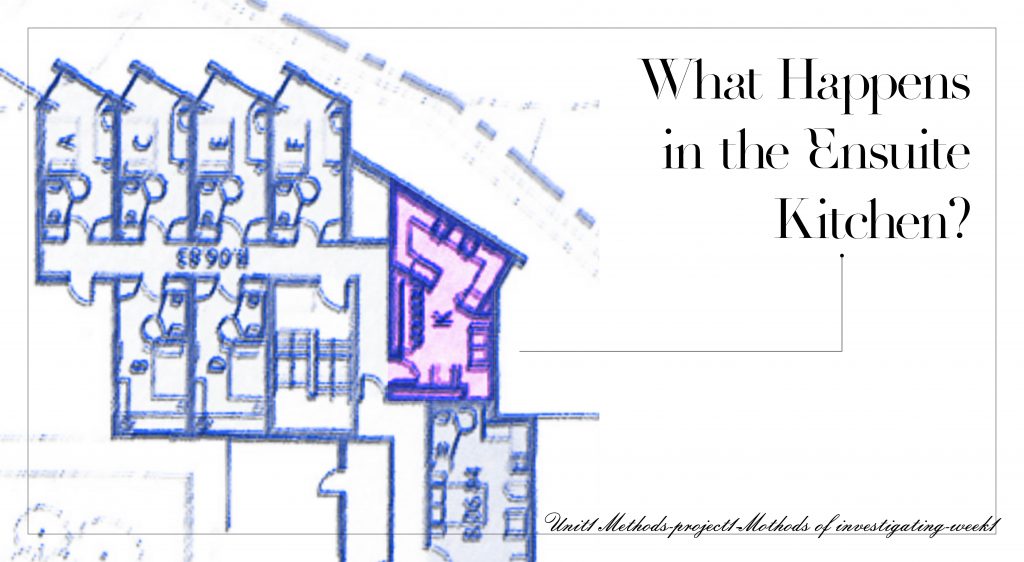
Project Reflection Writing: The Social Dynamics of Shared Kitchen Spaces
·Theme
My project focuses on how using a shared kitchen affects relationships between flatmates, showing how everyday spaces can influence social behavior. Georges Perec’s Species of Spaces is helpful for understanding this. Perec (1974) writes about ordinary spaces, like streets, neighborhoods, and kitchens, as places where life happens. This idea relates to my project because it helps me see the shared kitchen as more than just a practical space—it’s a place where interactions happen, where people either connect or experience conflicts.
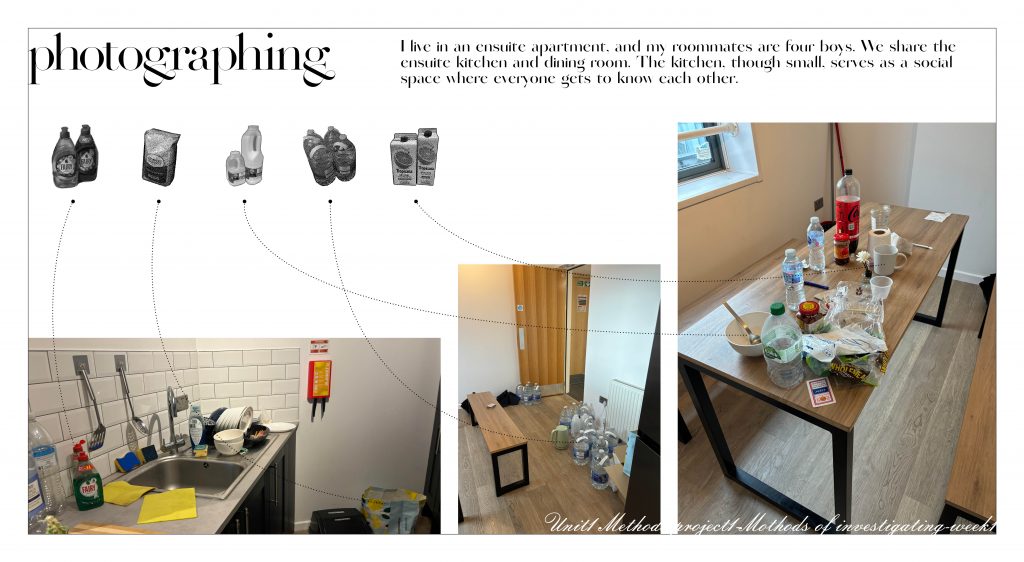
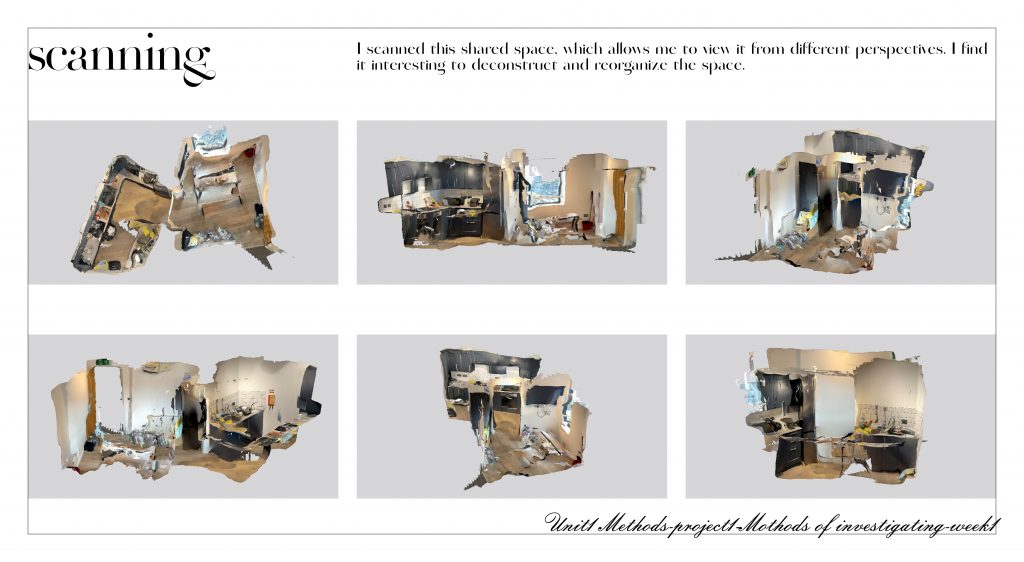
Perec’s thoughts help me understand how kitchens are important for shaping both individual and group identities, reflecting the ways people live together. The shared kitchen, in this sense, becomes a microcosm of the broader social dynamics, where personal boundaries and communal living come together, often in ways that reflect larger societal norms and behaviors.
·Form
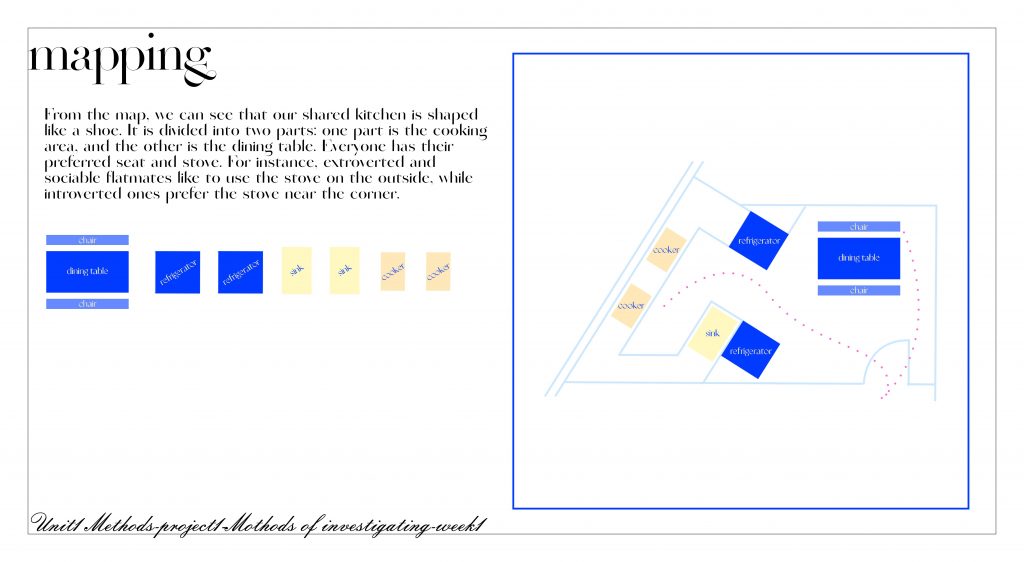
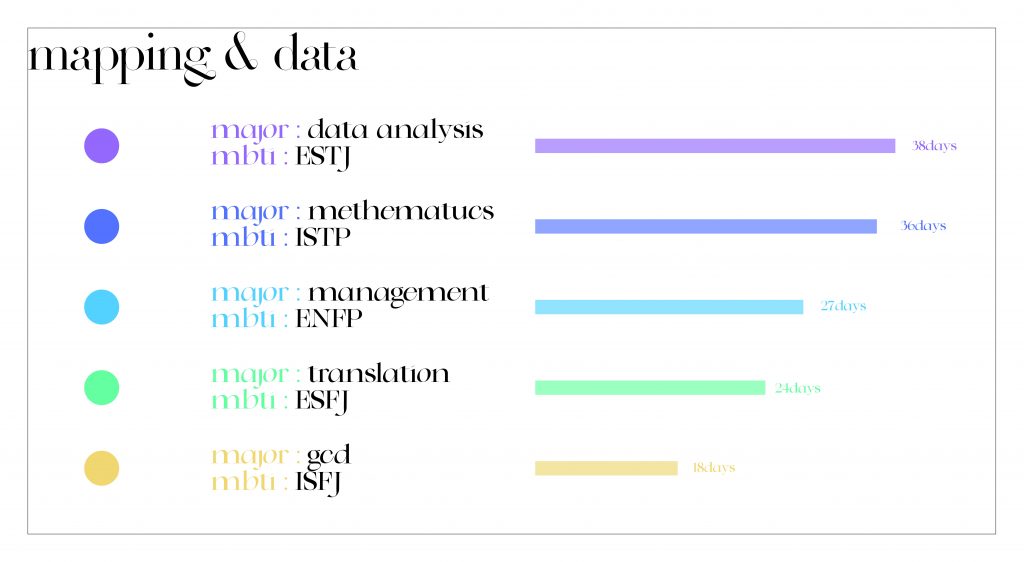
The visual structure of my project, especially the way I’ve mapped out movements in the kitchen, was inspired by Agnès Varda’s documentary The Gleaners and I. In the film, Varda (2000) carefully observes everyday activities and uses her camera to collect these moments. Her visual style influenced my decision to use maps to show how people interact in the kitchen.
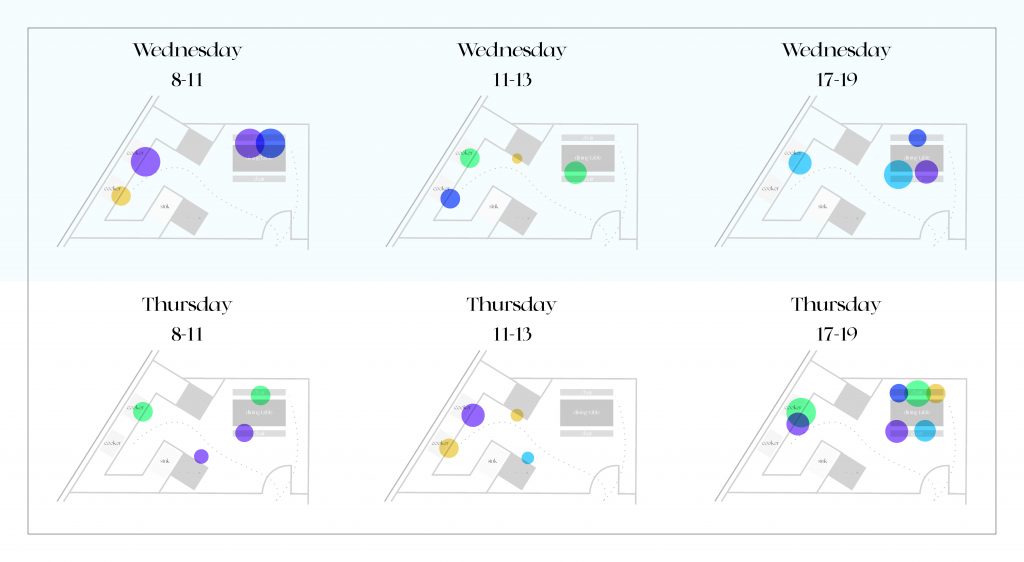
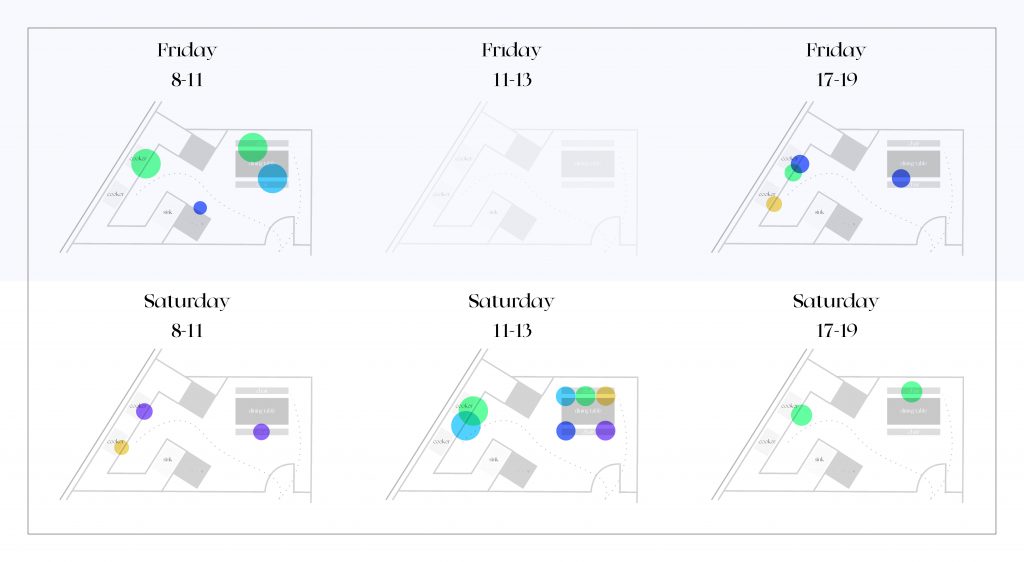
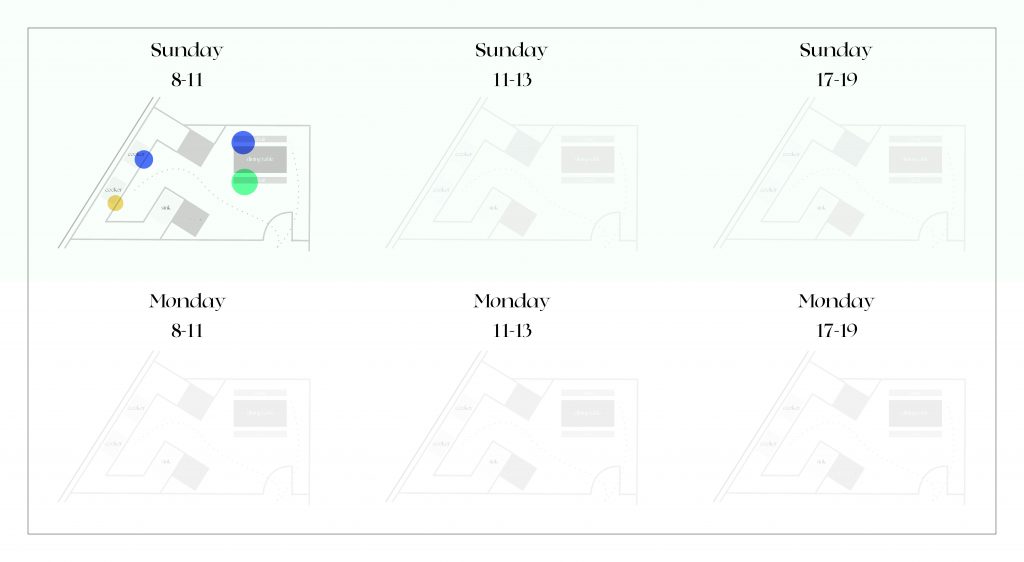
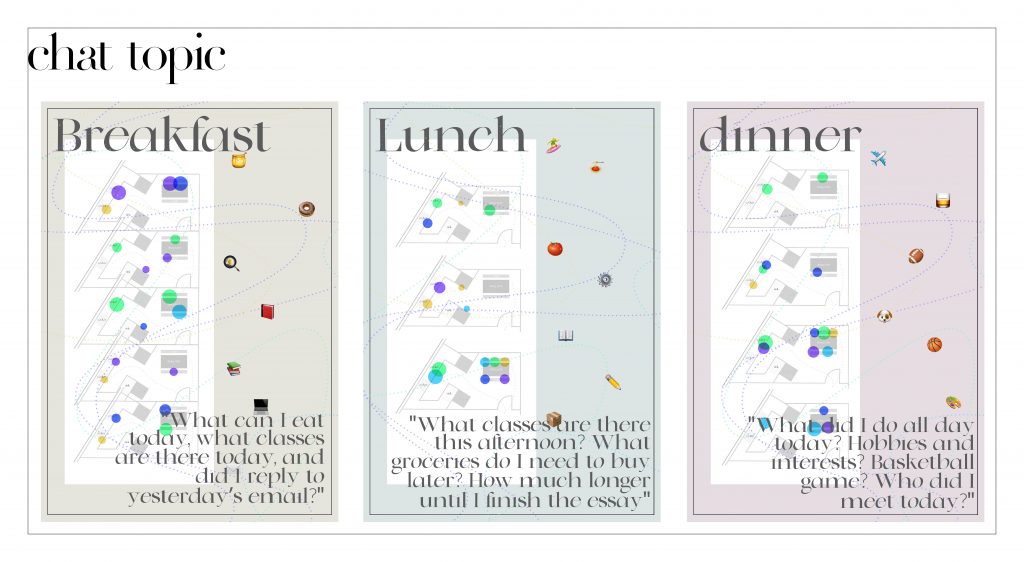
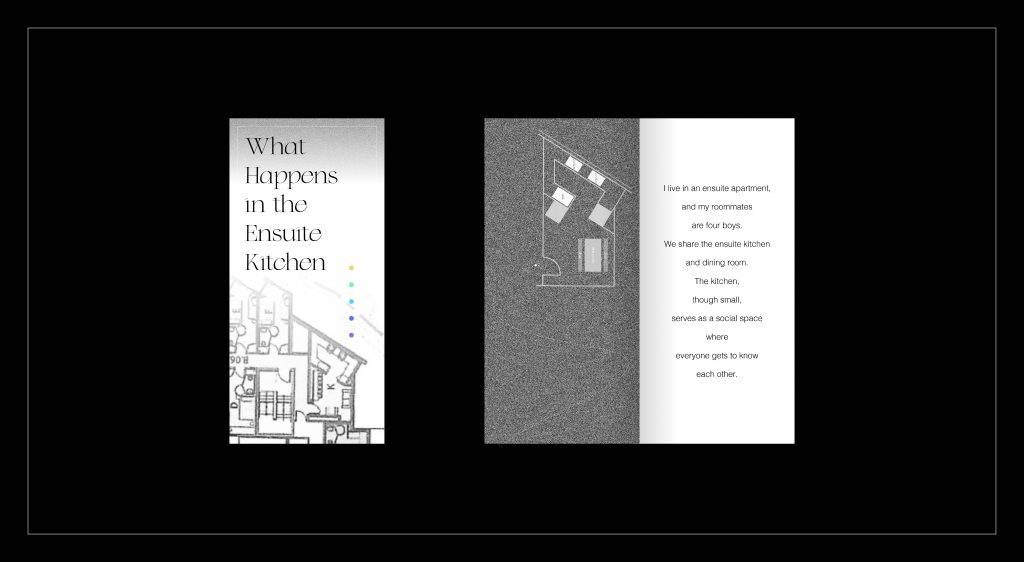
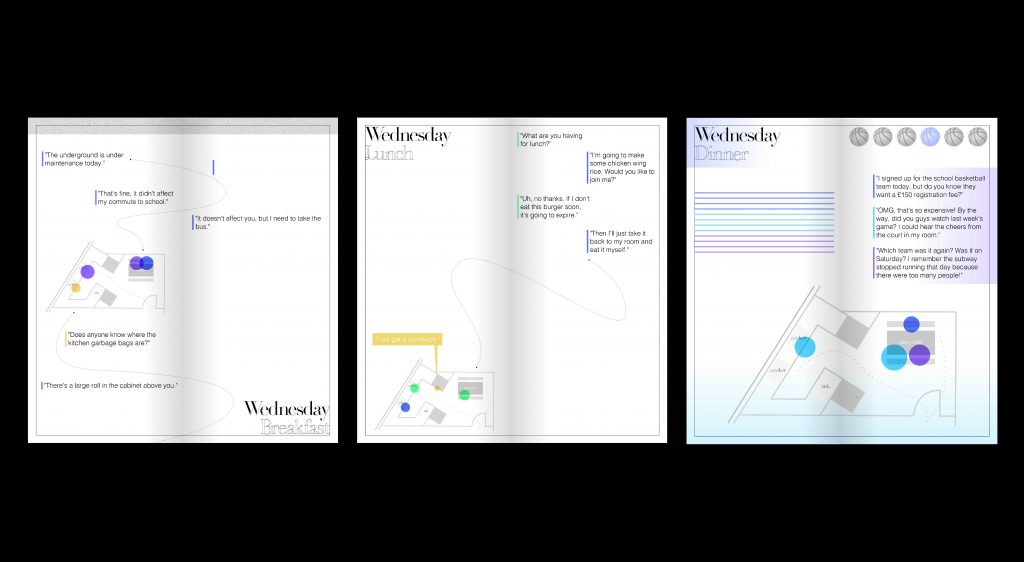
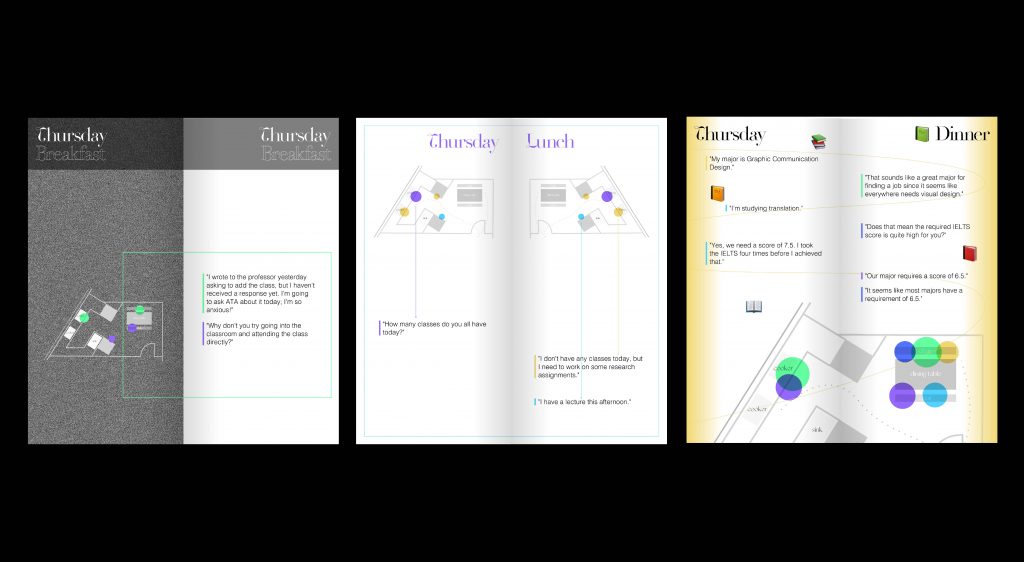
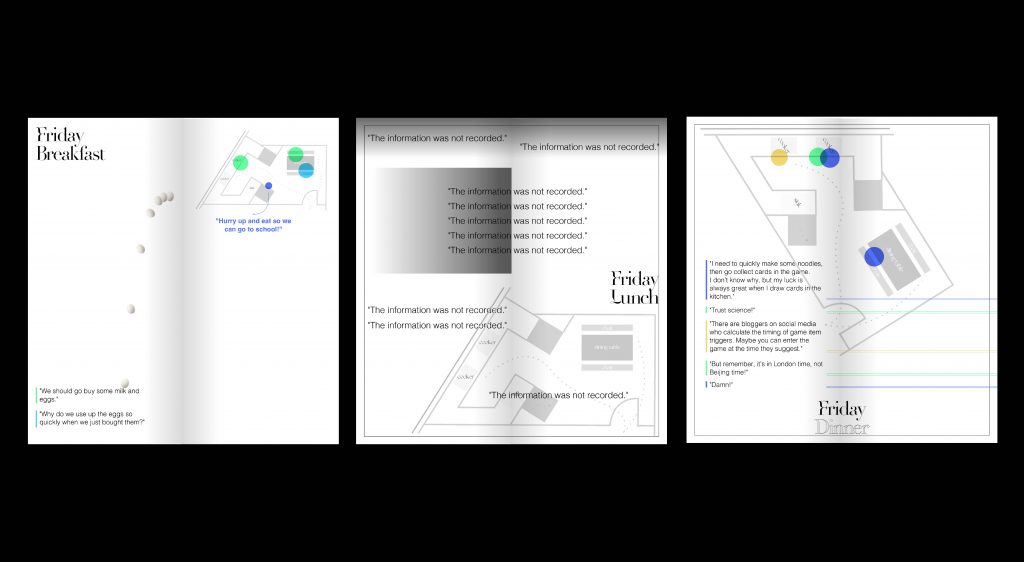
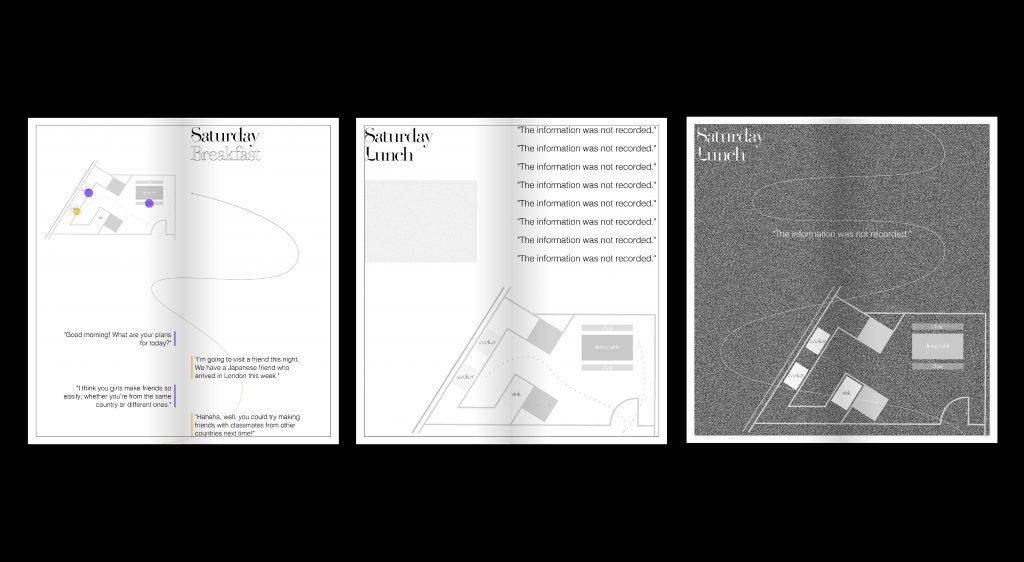
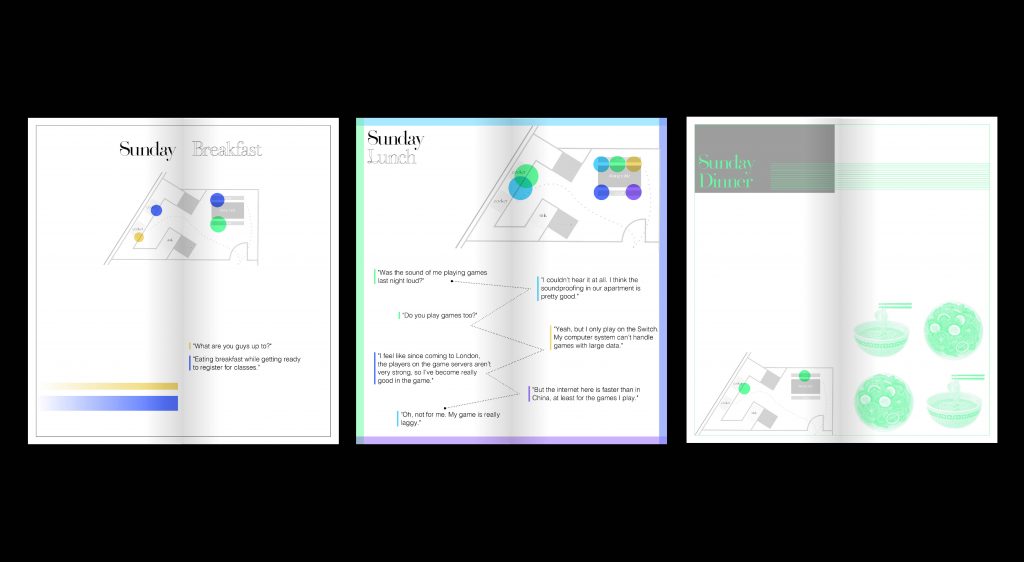
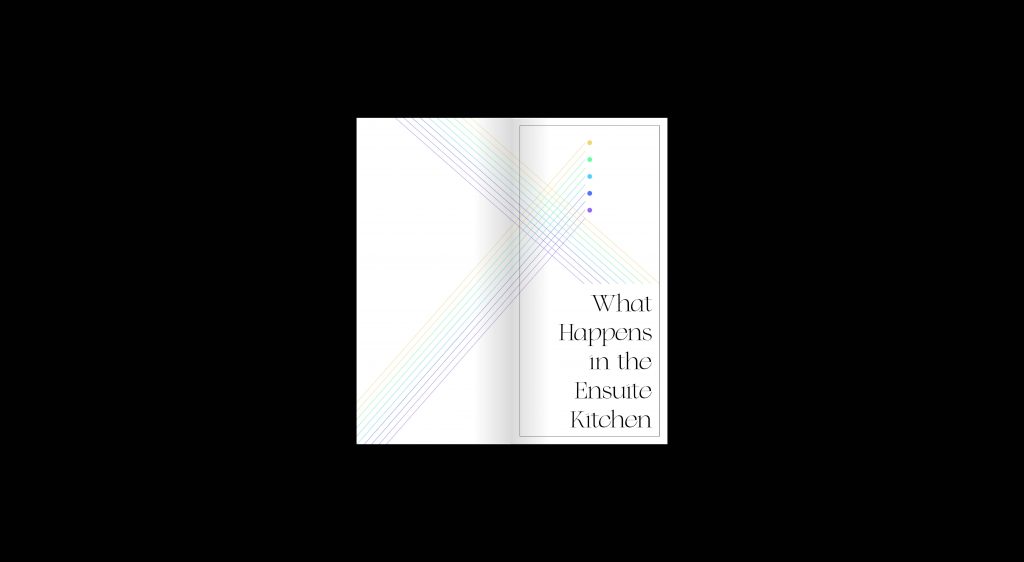
In addition, I created a booklet to document these observations. The booklet records the time my flatmates and I spend in the kitchen each day, as well as the conversations we have during each meal. Just like Varda’s film, my project captures the small, everyday details of life, but in a way that makes them more interesting. By focusing on routine conversations and showing them in a clear visual format, I hope to make the social dynamics of shared living easier to see. The booklet’s layout not only shows physical movements and conversations but also reflects the flow of interactions visually, with the page colors becoming more vibrant when conversations are lively, and duller when interactions are minimal.
·Process
The process of my project was also influenced by Varda’s approach in The Gleaners and I. In the film, she observes life around her, collecting moments of everyday behavior and using them to build a bigger picture. For my project, I spent a week observing what happens in the shared kitchen—what people say, what they do, and how long they stay. By documenting the daily routines and conversations in the kitchen through the booklet, I was able to capture how small, everyday actions, like making tea or washing dishes, contribute to the relationships among flatmates. The format of the booklet allowed me to reflect on the different levels of engagement among my flatmates, from brief exchanges to more in-depth conversations. Varda’s method helped me understand that even the most ordinary actions, like cooking or cleaning, are important for understanding social connections in shared spaces. This observation-based approach provided me with a deeper insight into how physical presence and communication within the shared kitchen evolve over time, shaping the dynamics of communal living.
Yike